 Skip to content
When a garage door leaves the tracks and hangs diagonally in the opening, the situation can change quickly. The door may be supported by only part of its roller, cable or hinge system while the springs remain under load. This Denver-area before-and-after project shows why severe off-track damage sometimes requires a full garage door replacement.
The project photos have been prepared without the customer’s house number. They provide a useful real-world example of the difference between a door that can be reset safely and one whose sections and hardware have been damaged beyond a dependable repair.
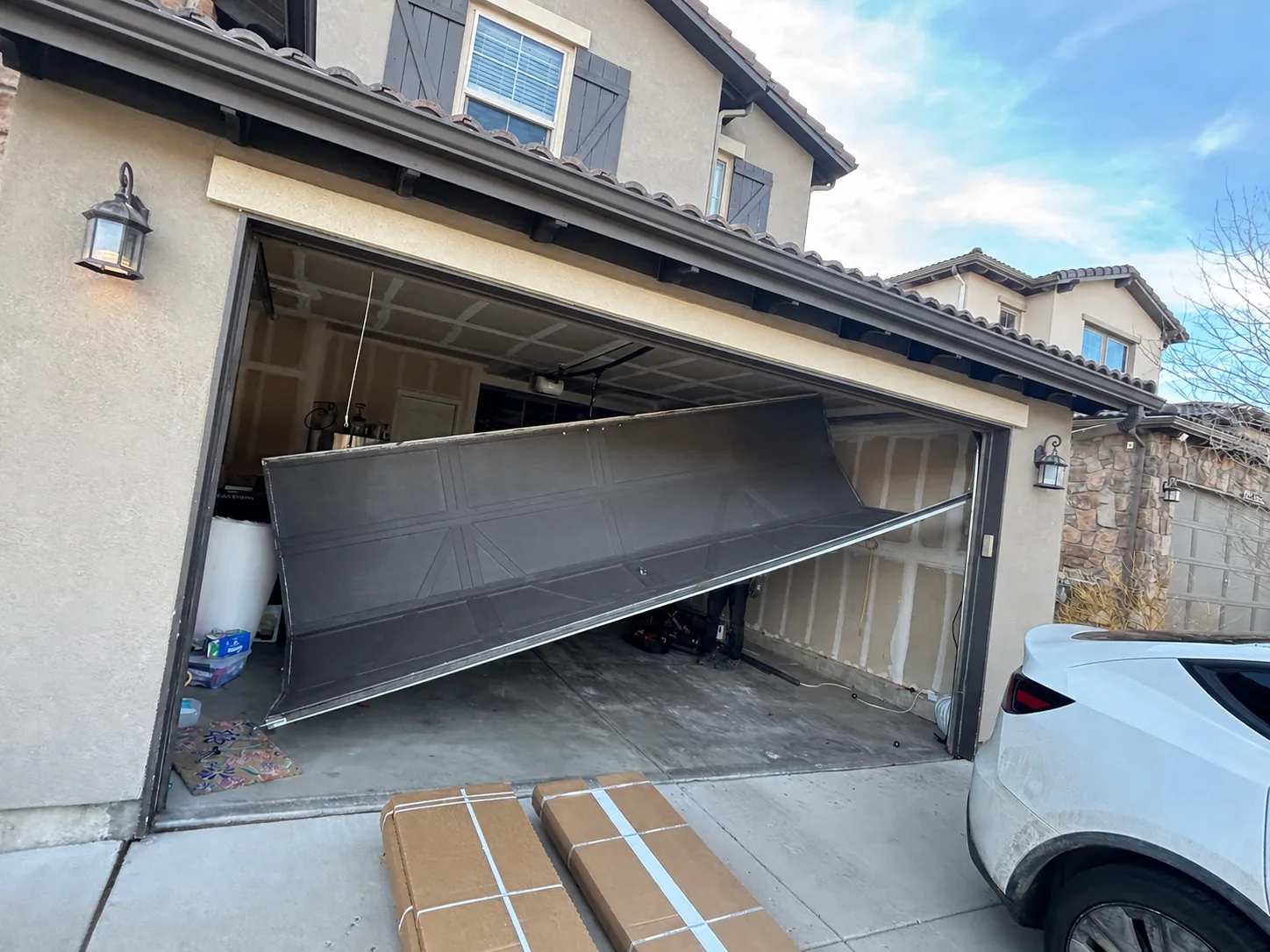
What makes an off-track door dangerous
Garage doors are heavy moving systems. The tracks guide the rollers, but springs and cables counterbalance the weight. When a roller exits the track or a cable loses tension, the load can shift to the remaining hardware. A bent section may then twist, fold or pull additional rollers free.
Do not try to push a door like this back into the track. Do not loosen the bottom brackets, cut a cable or operate the opener to “straighten” the door. The opener can add force to a jammed system, and stored spring tension can make hardware move unexpectedly.
Common causes of severe off-track damage
- Vehicle or object impact: even a low-speed strike can bend a section and displace rollers.
- Broken or loose cable: one side may drop while the other remains supported.
- Bent track or worn roller: a damaged guide path can allow a roller to escape.
- Operating against an obstruction: repeated opener force can twist sections and brackets.
- Existing balance problems: weak or incorrect springs can increase strain on the opener and door hardware.
A proper diagnosis identifies the initiating problem as well as the visible damage. Replacing a door without correcting the track, cable, spring or opener issue that contributed to the failure would leave the new system at risk.
When an off-track door may be repairable
A reset may be possible when the door sections remain straight, the tracks are sound and the problem is limited to a roller or cable that can be replaced correctly. The technician still needs to secure the door, control spring tension and confirm that the system is balanced before normal operation resumes.
Replacement becomes the stronger option when sections are deeply creased, hinge attachment points are torn, multiple rollers have escaped or the door no longer holds a square shape. Parts availability matters too: an older discontinued panel may not have a safe or visually acceptable match.
Planning the new garage door
The new system should be selected from verified opening measurements and the conditions around the garage. Door construction, insulation, section profile, track radius and spring design all influence the final fit. If the garage is attached to the home, an insulated door can also improve comfort and reduce heat transfer through the opening.
The opener is evaluated separately. It should move a balanced door with consistent travel, not compensate for excess weight or binding. A reusable opener needs compatible geometry, functional safety sensors and a reliable reversal system.
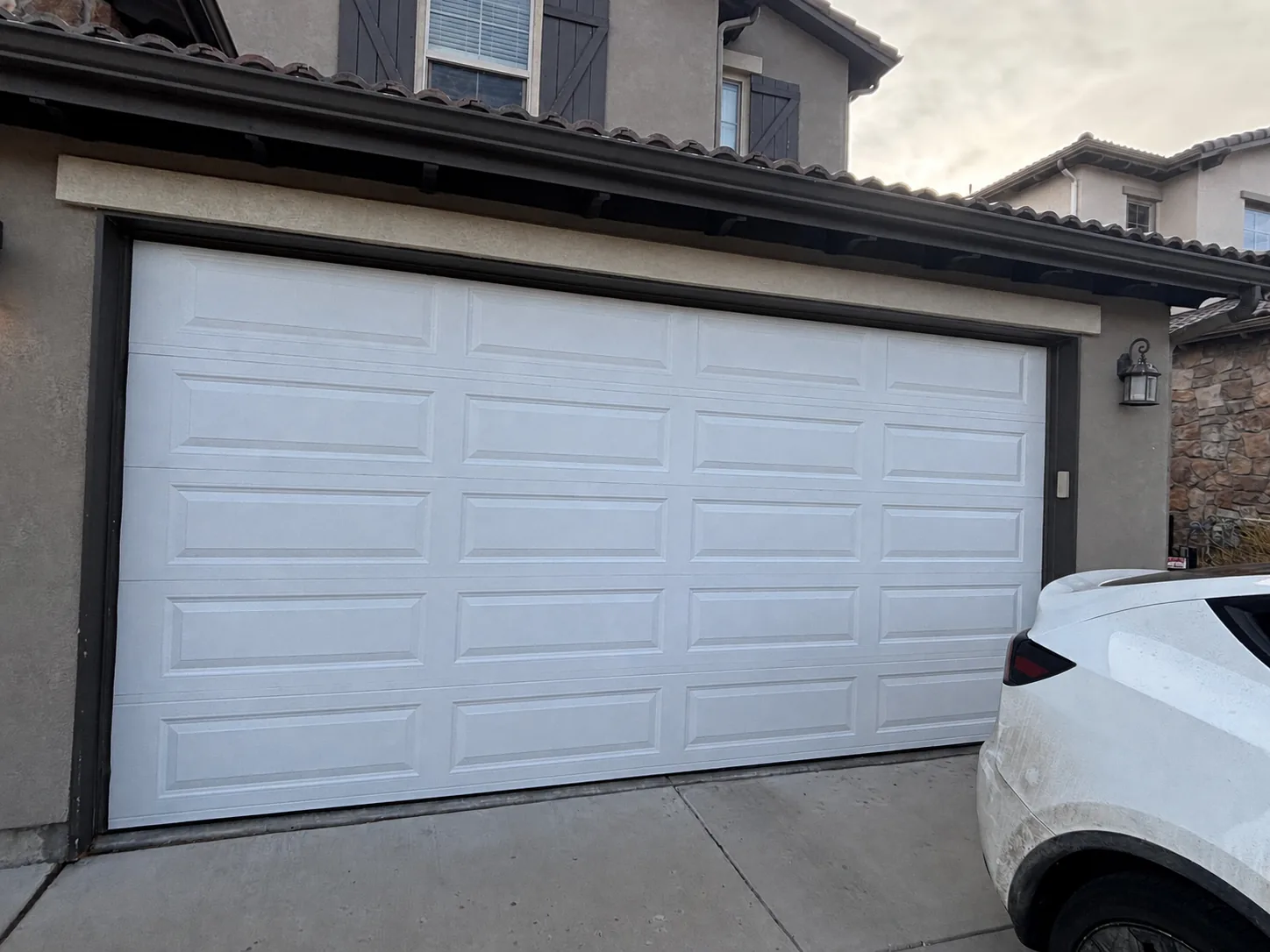
What the final inspection should confirm
A finished door should look level, but appearance is only the first check. The rollers should follow the tracks smoothly without rubbing or jumping. The cables should remain seated and equally tensioned, hardware should be secure and the bottom seal should contact the floor evenly.
Balance testing is critical. Under the manufacturer’s procedure and with the opener safely disconnected, the door should be controlled through its travel rather than falling or rising on its own. After reconnection, the opener limits, photo eyes and automatic reversal are tested before the homeowner resumes normal use.
Warning signs to act on before a door comes off track
- The door begins to rise unevenly or one side sits lower.
- A cable looks loose, frayed or displaced from its drum.
- Rollers wobble, bind or repeatedly strike the track.
- Sections flex, crack or separate at the hinges.
- The opener strains, slows down or changes sound.
Stopping early can prevent a manageable repair from becoming a larger replacement project. If you see any of these signs, keep the door closed when safe and avoid repeated opener cycles.
Repair and replacement help in Denver
Pine Garage Door provides garage door repair in Denver for off-track doors, cables, rollers, springs and opener problems. When the sections or full system need replacement, see our Denver garage door installation service. You can also explore our official Pine Garage Door locations, request service online or call (303) 865-5932.
Frequently asked questions
Can I put a garage door back on track myself?
It is not recommended. An off-track door may be unstable while cables and springs remain loaded. Moving rollers or track without securing the door can cause sudden movement and serious injury.
Does an off-track garage door always need replacement?
No. A trained technician may be able to reset and repair a door when the sections, tracks and attachment points remain structurally sound. Severe creasing, torn hardware or multiple damaged sections can make replacement the safer long-term choice.
Why did the new door need different springs?
Springs must match the actual weight and geometry of the installed door. Reusing springs that are incorrect for the new door can create poor balance and place extra strain on the opener and hardware.
How soon should an off-track door be inspected?
As soon as practical. Keep the area clear and do not operate the door while waiting. Tell the service company whether the door is open, tilted, trapping a vehicle or exposing the home.