 Skip to content
A collapsed garage door is more than an inconvenience. Bent sections can slip, loaded cables can release and the full weight of the door may no longer be supported evenly. This Denver-area before-and-after project shows why a severely folded sectional door called for a complete replacement rather than a cosmetic repair.
The photos document the condition clearly while protecting the homeowner’s identifying details. The goal of this guide is to explain what homeowners can learn from the project: when to stop using a damaged door, how repair and replacement decisions are made, and which final checks matter before a new door returns to daily service.
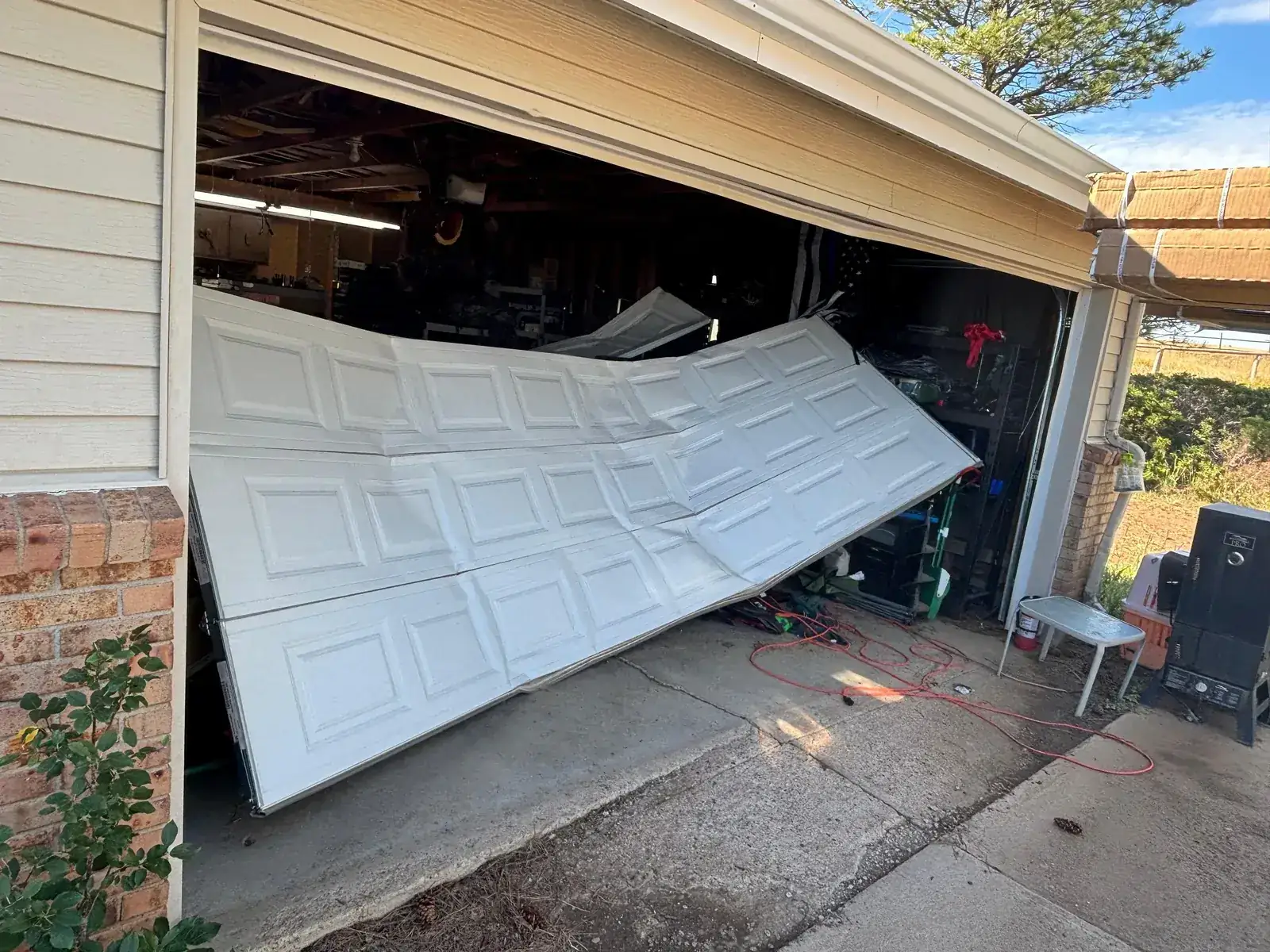
What the before photo tells us
The original door was folded across multiple sections and no longer formed a stable rectangle. Damage at this level can affect section joints, hinges, rollers, tracks and the counterbalance system at the same time. Even if the opener still makes noise, it should not be used to pull against a door in this condition.
A door that is crooked or partially collapsed can move without warning. The safest response is to keep people, pets and vehicles away from the opening. Do not stand under the door, loosen a cable, remove a roller or pull the emergency release while the door is elevated. The release disconnects the opener; it does not make a mechanically damaged door safe.
Why a limited repair was not the right fit
One damaged panel can sometimes be replaced when the remaining sections are straight, the model is still available and the hardware has not been overloaded. That is different from a door that has folded through several section joints. Once multiple sections are creased and the door no longer holds its intended shape, a panel-only repair may leave hidden weaknesses or create a poor match.
A complete replacement also gives the installer a chance to match the new door weight with the correct spring system, confirm track alignment and evaluate opener compatibility. Those items matter because a residential opener is designed to guide a balanced door, not lift the full weight of an unbalanced one.
How a replacement project is planned
A dependable plan starts with the opening, not with a catalog photo. The width and height of the framed opening, side room, headroom and backroom all affect which door and track configuration will fit. The technician also checks the jambs, existing track, spring layout, opener rail and the route needed to remove damaged sections safely.
For Denver-area homes, insulation can be worth comparing because a garage door covers a large part of the exterior wall. The right choice depends on whether the garage is attached, heated, used as a workspace or located below living space. Panel style and color matter, but fit, balance and safe operation come first.
Installation details that protect the new door
- Correct track spacing: rollers need consistent clearance without binding or excessive side-to-side movement.
- Door-specific springs: spring size and turns must match the actual weight of the installed door.
- Secure section hardware: hinges, brackets and reinforcement must follow the door manufacturer’s layout.
- Opener compatibility: the opener arm and travel limits should guide the door without pulling it out of alignment.
- Weather sealing: perimeter and bottom seals should meet the opening without creating excessive resistance.
Spring winding, cable installation and bottom-bracket work involve stored energy and belong with trained technicians. Homeowners can inspect visible condition from a safe distance, but these are not do-it-yourself adjustments.
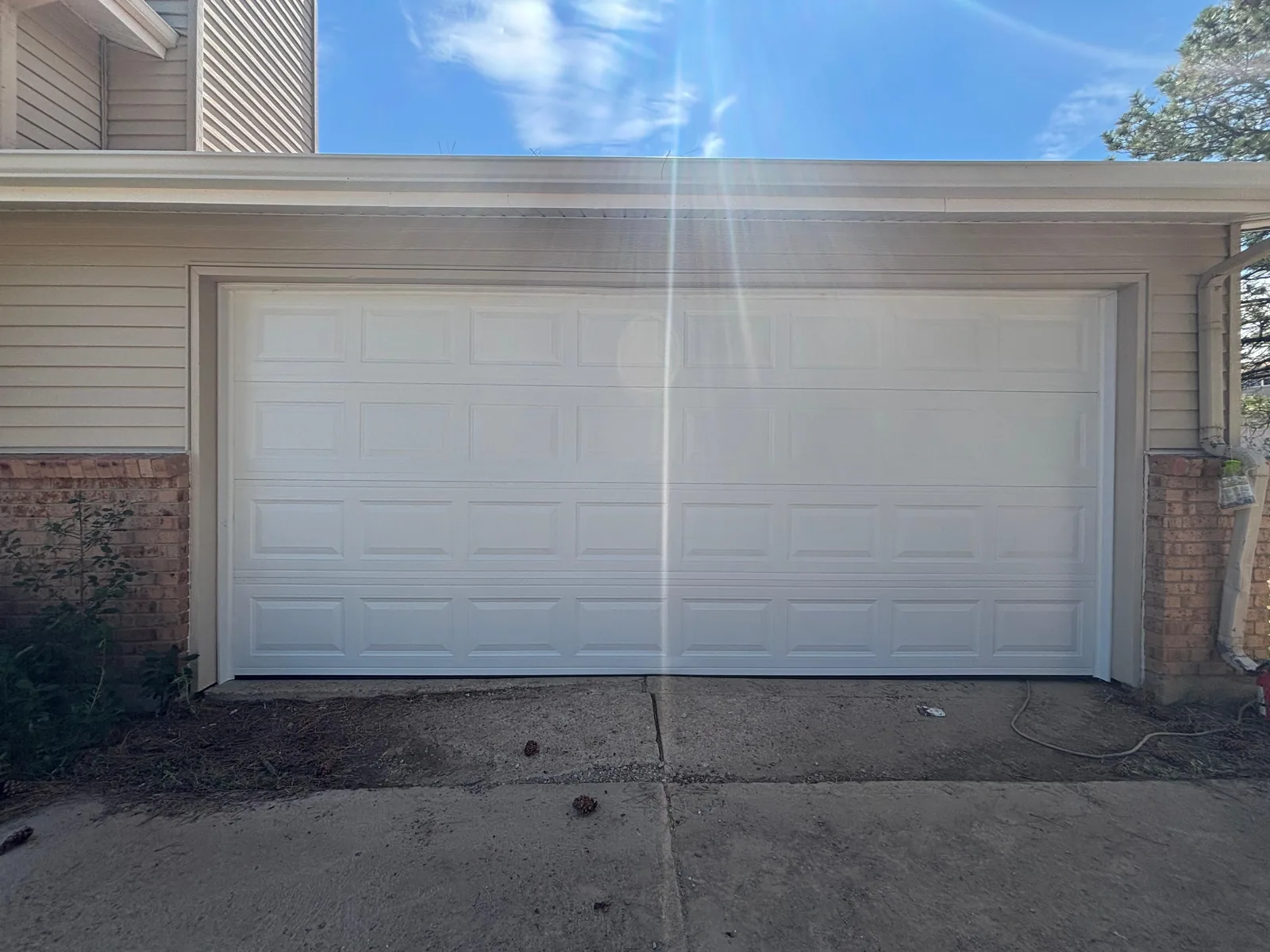
Final checks before the door goes back into service
The after photo shows the visible result, but the most important checks happen through operation. With the opener disconnected under safe conditions, the door should move smoothly and remain controlled through its travel. A door that drops, shoots upward or feels unusually heavy needs correction before the opener is reconnected.
The technician should then set opener travel and force according to the equipment instructions, verify photo-eye alignment and test the automatic reversal system with the prescribed method. Hardware is inspected for secure fasteners, cables should sit correctly on the drums and the door should close evenly against the floor.
What homeowners should do after an impact or collapse
- Stop operating the door and keep the opening clear.
- Do not touch loose cables, springs, bottom brackets or displaced rollers.
- Photograph the overall condition from a safe location.
- Tell the service company whether the door is open, closed, crooked or trapping a vehicle.
- Ask for both repair and replacement reasoning, including parts availability and the condition of the remaining sections.
If your door is bent, folded or no longer contained in the tracks, Pine Garage Door can inspect the full system and explain the safest path forward. Review our Denver garage door repair service and garage door installation options. For direct help, request a service appointment or call (303) 865-5932.
Frequently asked questions
Can a collapsed garage door be repaired?
It depends on the number of damaged sections, the condition of the tracks and hardware, and whether matching panels are available. A door folded across multiple sections commonly needs complete replacement because its structure is no longer reliable.
Should I pull the emergency release?
Not when the door is open, crooked or unstable. Disconnecting the opener can allow an unbalanced door to move suddenly. Keep clear and wait for a trained technician.
Can the existing opener be reused with a new door?
Sometimes. The opener’s condition, age, horsepower or force rating, rail geometry and safety features should be checked against the new door. The door must be properly balanced before the opener is tested.
How can I reduce the chance of another failure?
Do not drive or store objects in the door’s travel path, stop using the system when the door becomes uneven or noisy, and schedule service when cables fray, rollers leave the track or sections begin to bend.