 Skip to content
The cost of replacing a garage door in Denver depends on more than the panel style shown in a catalog. The opening, door construction, insulation, track layout, spring system, opener compatibility and installation conditions all shape the final scope.
A useful estimate should explain those choices instead of offering one number that may not fit the home. This guide shows the questions that affect price and helps Denver homeowners compare proposals on the same basis.
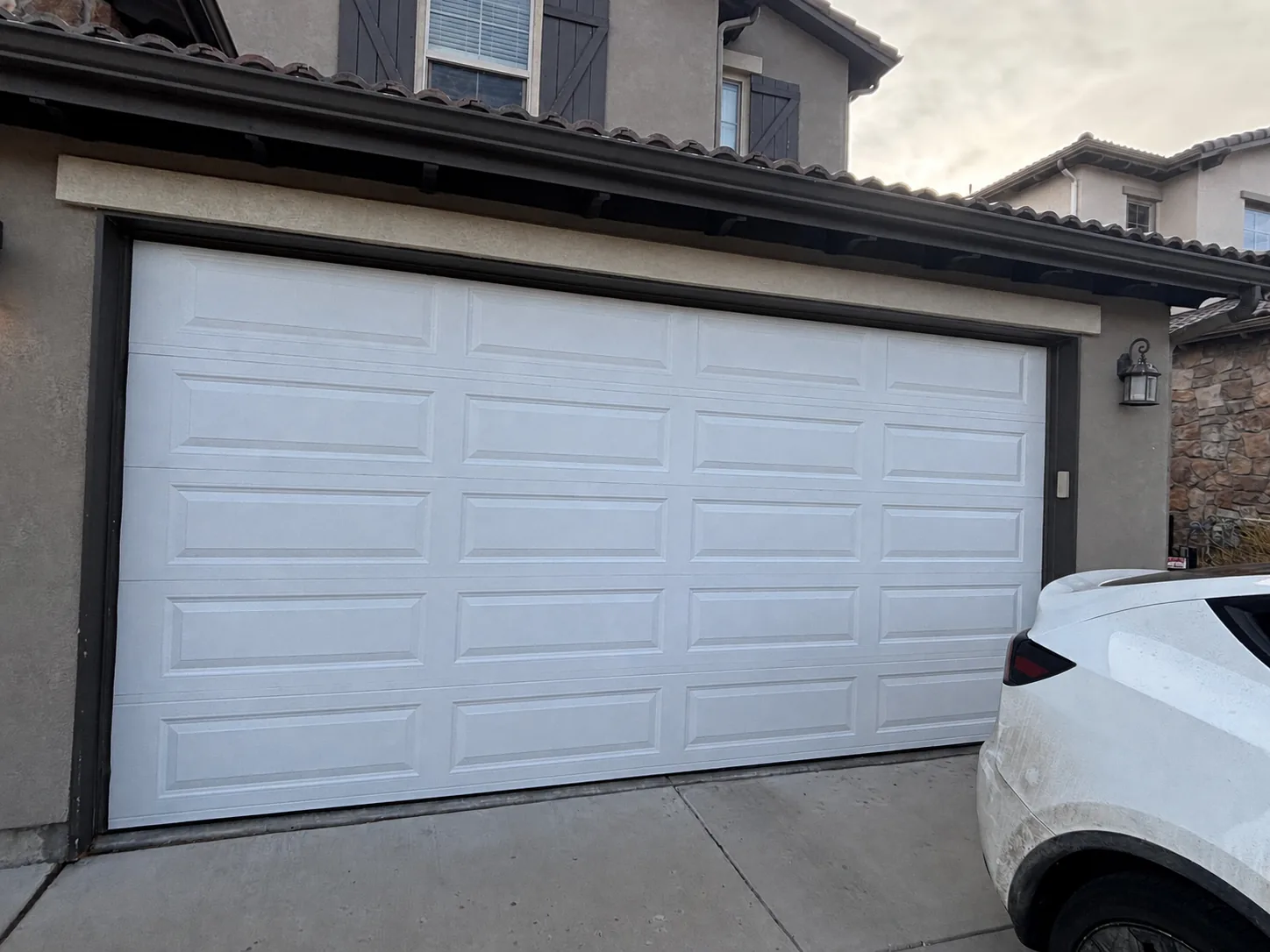
1. The size and configuration of the opening
A single-car opening and a double-car opening require different amounts of door material, reinforcement and hardware. Height matters too. An oversized or nonstandard opening may need a special door, different track geometry or additional framing work.
The installer should measure the finished opening along with side room, headroom and backroom. Those dimensions determine whether standard track will fit and whether low-headroom hardware or another configuration is required. Measuring only the old door can repeat an earlier fit problem.
2. Door material and section construction
Steel, wood, composite and full-view doors have different material and maintenance considerations. Even within steel doors, section thickness, reinforcement and exterior finish can vary. A heavier door may need a different spring system and stronger supporting hardware.
Appearance matters, but compare the construction behind the design. Ask which parts are included, how the sections are reinforced and what maintenance the finish requires in Denver sun, wind and seasonal temperature changes.
3. Insulation and the door’s tested performance
Insulation can be valuable when the garage is attached to the home, used as a workspace or located below living space. Different doors may use polystyrene, polyurethane or another construction, and the advertised R-value applies to a specific tested assembly.
A higher number is not automatically the best purchase for every detached garage. Compare the complete door, perimeter sealing and how the space is used. Gaps around an uneven opening can reduce comfort even when the sections themselves are insulated.
4. Windows, decorative hardware and finish options
Windows, specialty glass, custom colors, wood-look finishes and decorative hardware can change the material price and lead time. Glass placement also affects privacy, daylight and the visual balance of the front elevation.
Ask whether the selected window design is available for the exact door model and width. If a homeowners association applies, confirm the style and color requirements before ordering a custom product that may not be returnable.
5. Track, spring and hardware requirements
A new door needs hardware matched to its actual weight and geometry. Springs, drums, cables, rollers and track are not universal. Reusing worn or mismatched components to reduce the initial price can create poor balance and additional strain.
A complete proposal should state whether new track and counterbalance hardware are included. Spring sizing and cable installation involve stored energy and belong with trained technicians. The finished door should move smoothly and remain controlled through its travel before the opener is connected.
6. Garage door opener compatibility
The existing opener may be reusable when it is in good condition, correctly mounted, compatible with the new door and able to pass its safety tests. Replacement may make more sense when the operator is unreliable, obsolete or improperly configured for the opening.
The opener should guide a balanced door rather than lift its full weight. A proposal that includes an opener should identify the drive type, controls, safety equipment and any reinforcement required by the door manufacturer. See our Denver garage door opener service for related options.
7. Removal, disposal and access to the work area
Removing an intact sectional door is different from stabilizing one that is folded, off track or hanging from damaged hardware. Difficult access, limited driveway clearance or stored items around the opening can also affect labor and safety planning.
Confirm whether the estimate includes removal and disposal of the old sections, track and hardware. Clear the work area before installation, but do not dismantle damaged springs, cables, bottom brackets or rollers yourself.
8. Framing, floor and opening conditions
Rotten jambs, loose mounting surfaces, an uneven floor or an opening that is not square can prevent a new door from sealing and tracking correctly. Those conditions may require separate carpentry or repair before installation begins.
An installer should point out visible issues during measurement and explain which work is included. A new bottom seal cannot compensate for a major slope or structural problem, and track brackets need sound material for secure attachment.
9. Permits, product availability and project timing
Permit or code requirements can vary by project and jurisdiction, especially when structural work or electrical changes are involved. A reputable proposal should identify who is responsible for any required approvals rather than assuming they do not apply.
Door model, color, windows and size also affect availability. In-stock standard configurations may follow a different schedule from custom orders. Ask when the product will be confirmed, what happens if lead time changes and when installation can be scheduled after delivery.
Repair or replace: which option makes sense?
Replacement is not always necessary. A focused repair may be appropriate when the sections remain structurally sound and the problem is limited to serviceable springs, cables, rollers, hinges or opener components. Replacement becomes more reasonable when multiple sections are deeply creased, the model is discontinued, hardware attachment points are damaged or repeated repairs no longer address the full condition.
Compare the current door’s safety, reliability, parts availability, energy goals and appearance. Our Denver garage door repair service can help separate a repairable fault from a replacement-level problem.
How to compare garage door replacement estimates
Ask each company to quote the same scope so the totals are meaningful. A clear proposal should identify the door model, size, construction, insulation, windows, color, track, spring system, removal, disposal, labor and opener work. It should also explain any known exclusions.
- Verify the exact door size and model, not only the appearance.
- Confirm which new hardware is included and what will be reused.
- Ask how insulation and weather sealing fit the garage’s actual use.
- Separate opener work from the mechanical door installation.
- Request an explanation of site repairs, disposal and scheduling.
- Confirm the final balance and safety checks included after installation.
Schedule a Denver garage door replacement estimate
Pine Garage Door can measure the opening, inspect the existing system and explain replacement options for Denver homes. Review our garage door installation service, explore Pine Garage Door locations, or request an appointment online. You can also call (303) 865-5932.
Bring photos or model information if available, but a final recommendation should be based on verified measurements and an on-site assessment of the opening and hardware.
Frequently asked questions
Can I get an exact garage door replacement price without an on-site measurement?
A preliminary range may be possible, but the final scope depends on verified opening dimensions, door options, track layout, hardware, opener compatibility and site conditions. An on-site measurement reduces surprises.
Does an insulated garage door always cost more?
Insulated construction usually changes the product and may change the hardware requirements. Whether it is worthwhile depends on how the garage is used, its connection to the home and the complete door and sealing system.
Can the old garage door opener be reused?
Sometimes. The opener must be compatible with the new door, securely mounted and able to guide a properly balanced system while passing its safety tests. Age and parts availability also matter.
Should I replace the tracks with the new door?
The new door manufacturer’s specified track and hardware should be used unless the installation instructions expressly allow otherwise. Old, bent or mismatched track can affect fit, travel and safety.