 Skip to content
A garage door that will not close leaves the home exposed and can put a heavy, unstable door overhead. The right first step is not to force it. Identify whether the door is level, whether loaded hardware is damaged and whether one simple control issue can be checked safely.
Denver homeowners often notice the problem at the worst possible time: before work, after a power interruption or when weather is moving in. Use the checks below to protect people and property while avoiding actions that can turn a small fault into a dangerous repair.
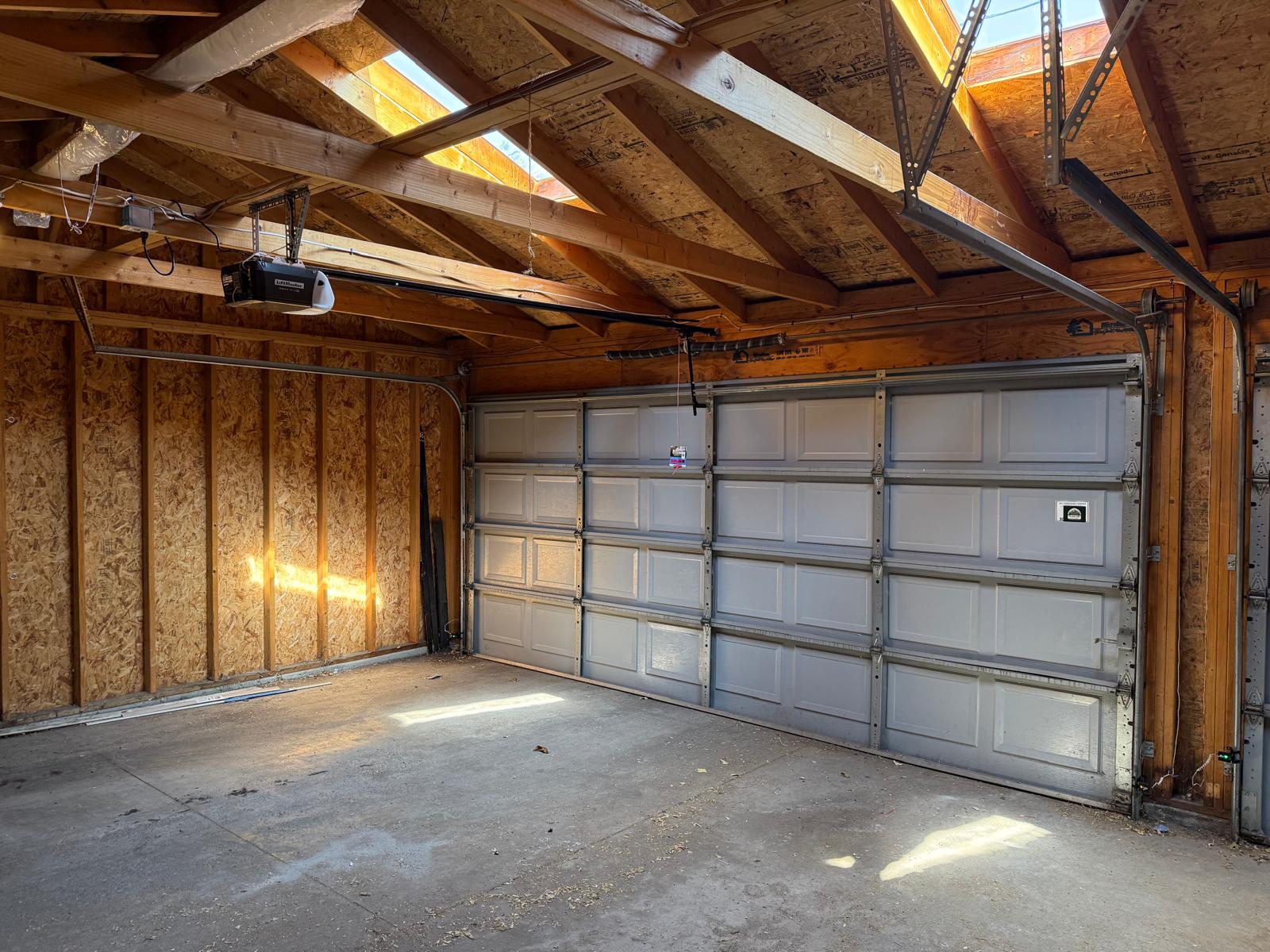
First decide whether the door is stable
Stand clear of the opening and look at the door from inside. Both sides should appear level in the tracks. Stop immediately if the door is crooked, a roller has left the track, a cable hangs loose or a torsion spring above the door has a visible separation. Do not stand below the door, pull on a cable or try to push a tilted section down.
If a vehicle or person is at risk, keep the area clear and call for professional help. The position of the door changes the forces in the spring and cable system, so a partially open door may move without warning when hardware is disturbed.
Check the controls without repeatedly cycling the opener
When the door is level and no damaged spring, cable or track is visible, compare the hardwired wall control with the remote. A failed remote battery, wall-console lock mode or interrupted power source can prevent normal operation. Confirm that the opener has power and that the manual lock on the door is not engaged against the opener.
Do not keep pressing the button if the motor runs but the door does not move. Repeated attempts can damage the opener when the door is mechanically jammed or too heavy because the counterbalance system has failed.
Look at the photo-eye safety sensors
Most residential openers use photo eyes near the floor. Remove obvious objects from their path and gently clean the lenses with a soft dry cloth. Look for loose mounting or indicator lights that differ between the two sensors, but do not bypass the system or hold a control to defeat a safety response.
If the door starts down and immediately reverses, sensor alignment may be involved. Resistance in the track, an incorrect travel setting or a mechanical obstruction can create a similar symptom, so persistent reversal still needs a complete diagnosis.
Understand what the manual release can and cannot do
The emergency release disconnects the opener trolley; it does not make a damaged door safe. Use it only when the door is fully closed, stable and there is no visible spring, cable or track problem. Disconnecting an open or poorly balanced door can allow it to fall.
If the power is out and the door is closed in sound condition, follow the opener manufacturer’s instructions for manual operation. Keep a firm grip, move the door slowly and stop if it feels unexpectedly heavy or will not remain controlled.
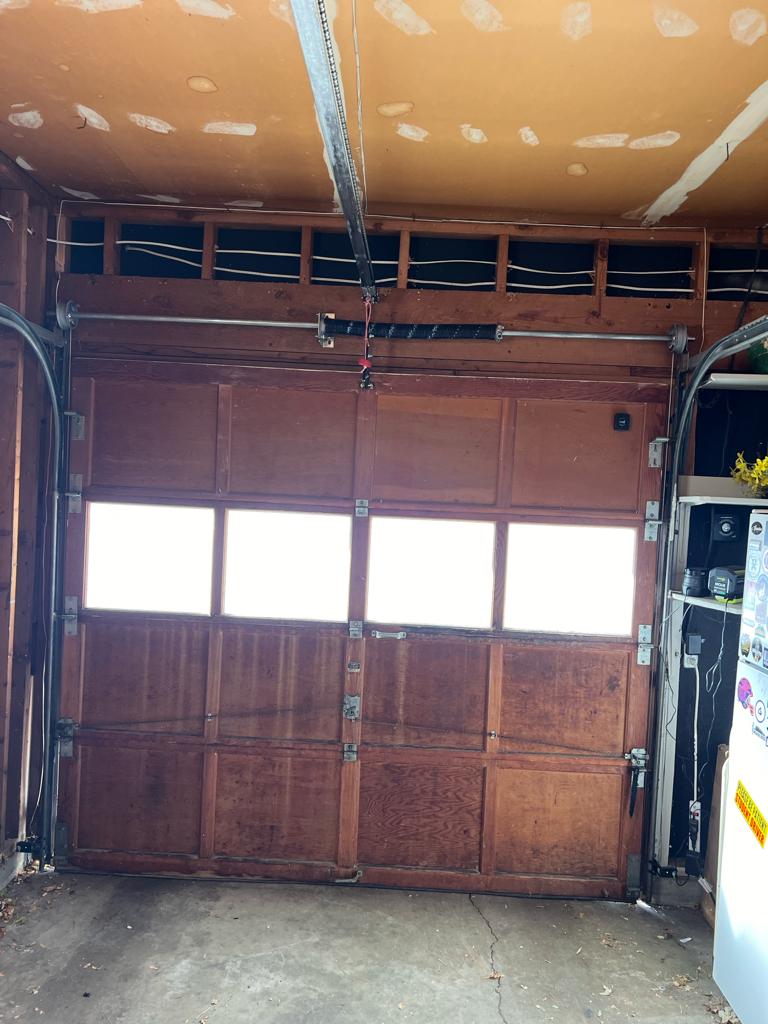
Common reasons a garage door stays open
- Blocked or misaligned safety sensors: the opener may refuse to close or reverse immediately.
- Broken spring or loose cable: the door may become heavy, uneven or impossible for the opener to control.
- Track or roller damage: a roller can bind or leave the track after wear or impact.
- Opener or travel-setting fault: the motor, trolley, drive system or limits may need service.
- Door or lock obstruction: damaged sections, debris or an engaged manual lock can block movement.
What to tell the repair company
Share the service address, door position, whether a vehicle is trapped and any visible spring, cable or track issue. Mention the opener brand, unusual sounds, recent impact or power interruption, and whether the wall control behaves differently from the remote. A safe-distance photo can help, but do not approach unstable hardware to take it.
Pine Garage Door provides garage door repair in Denver and can inspect the door, spring system and opener together. If the problem involves the automatic operator, review our garage door opener service. For direct help, request a Denver service appointment or call (303) 865-5932.
Frequently asked questions
Can I close a garage door that is stuck open?
Only attempt normal or manual closure when the door is level, stable and free of visible spring, cable or track damage. If it is crooked, heavy or partially detached, keep clear and call for service.
Why does my garage door close only when I hold the wall button?
That behavior often points to a photo-eye or safety-circuit issue, but the system should be diagnosed rather than bypassed. Clean obvious debris and request service if the problem remains.
Should I pull the emergency release when the door is open?
No. Disconnecting an open door can be dangerous if the spring system is weak or broken. The release should be used only under the opener manufacturer’s instructions when the door is stable.